

RESEARCH NEWS
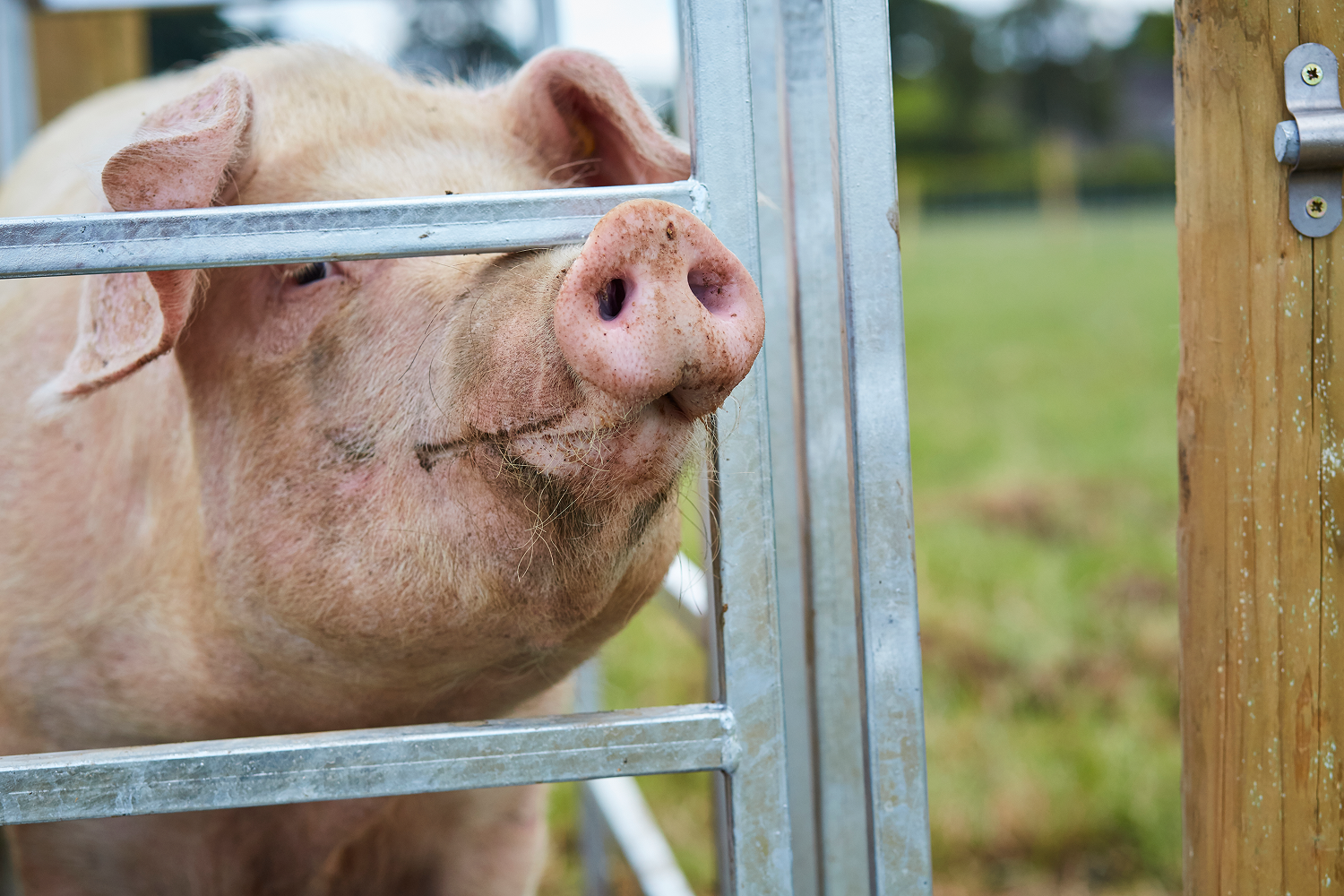

Cutting farming’s climate impact
The University farm is to become a pioneering research station to test and accelerate climate-smart agricultural methods.
Over the next five years, the site near Tadcaster will be one of ten farms across Europe exploring how to reduce their carbon footprint through changing the feed given to livestock, managing emissions from manure and slurry and using features such as hedgerows to prevent greenhouse gases from entering the atmosphere.
Professor Guy Ziv from the School of Geography is leading the research for Leeds. “Tackling agricultural emissions isn’t about a single silver bullet; it’s about understanding the farm as a complete, interconnected system,” he said. “By studying everything from animal feed and manure management to how our cropping systems and hedgerows can capture carbon, we can identify holistic solutions that are truly effective.
“Ultimately, this research is about providing farmers here in the UK and across Europe with robust, evidence-based options that are both environmentally and economically viable.”
The 317-hectare University farm, which operates commercially, is already home to:
- The University of Leeds Terrestrial Observatory which measures the impacts of different combinations of agriculture practices on the soil, biodiversity, crop yield, greenhouse gas emissions and profit
- The National Pig Centre, whose £11m facilities help improve the sustainability and efficiency of pig production
- A National Institute of Agricultural Botany centre for plant science, crop evaluation and agronomy
- A containerised insect farm used to explore the role of insect farming in sustainable food systems.
Tracking tiny flyers

Leeds scientists are using weather radar to monitor insect populations, providing valuable data on which species are thriving – and which are under threat.
Traditionally used to track rainfall and storms, radar is helping researchers monitor the daily movements and long-term numbers of airborne creatures including bees, flies and spiders. The work has shown how nocturnal arthropods such as moths are suffering significant decline, with increased light pollution a likely cause.
Researcher Dr Mansi Mungee said: “This is one of the first studies to show how day and night-flying insects are affected differently. It’s a crucial step toward understanding where to focus conservation efforts.”
Students tackle disability barriers
A Leeds alum has been integral in bringing together the School of Mechanical Engineering and REMAP, a UK charity that improves the quality of life for people who experience disability.
REMAP volunteers make and adapt equipment to meet the unique needs of individuals when no suitable alternative exists. The new collaboration will see students in mechanical and medical engineering, as well as product design, create bespoke solutions to help with everything from mobility and personal care to enabling people to pursue their hobbies and ambitions.
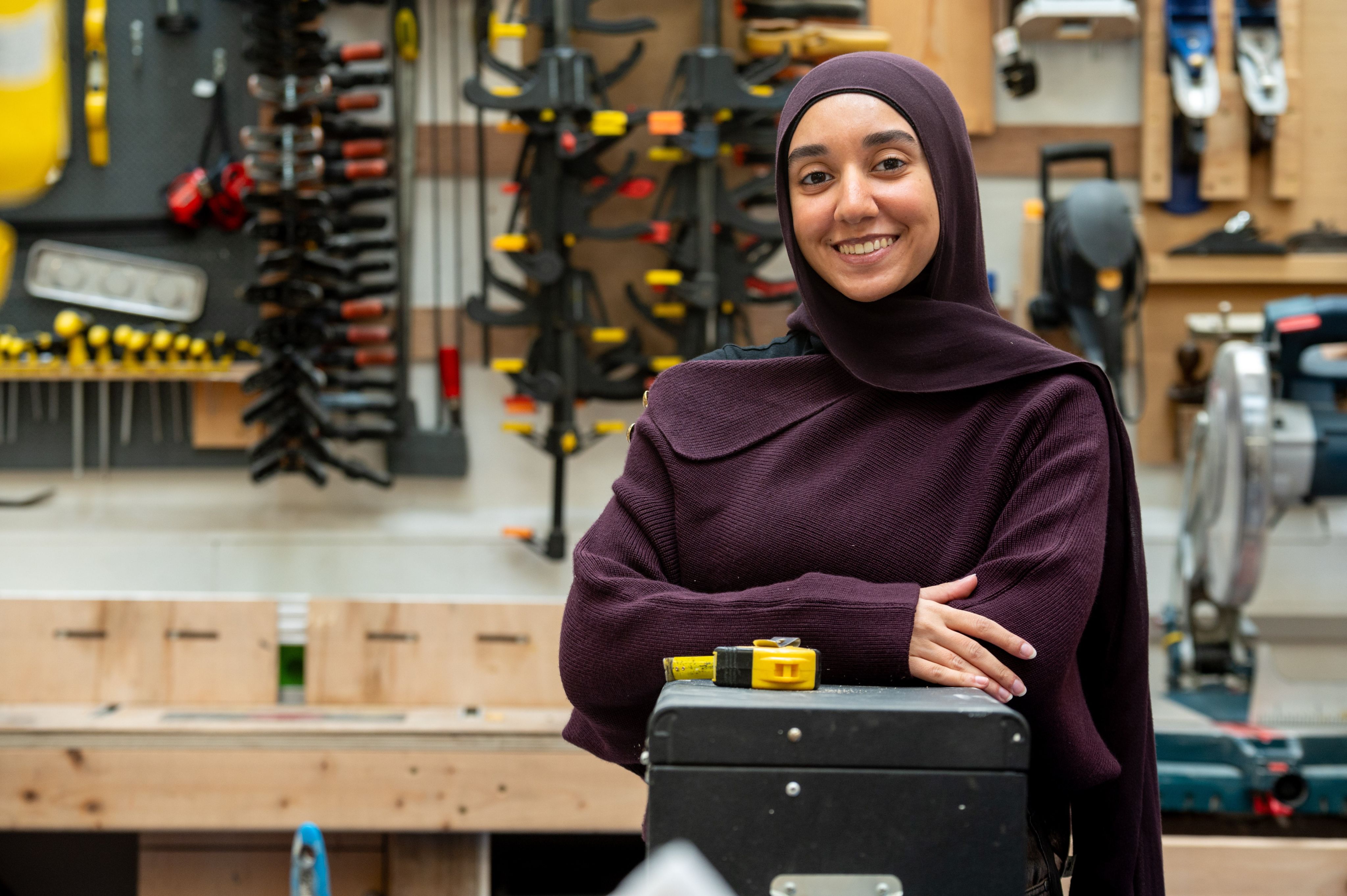
Fareda Al Wakeel (Medical Engineering 2024) began working for REMAP after graduating from Leeds and has helped bring the two organisations together. “As a REMAP volunteer, you get to work directly with clients and make a difference to people’s lives,” she says. “Students can lend their skills to the charity, while gaining experience of working with clients directly and having a real impact.”
Fareda has fond memories of her first case, when she supported a client with rheumatoid arthritis who was no longer able to hold a make- up brush. “It took a few iterations –
I would take their feedback on board and adapt my prototype each time. I remember the client telling me what I’d made was brilliant. That feedback sticks with you and it motivates you.”

Rebuilding Ukraine with recycled concrete

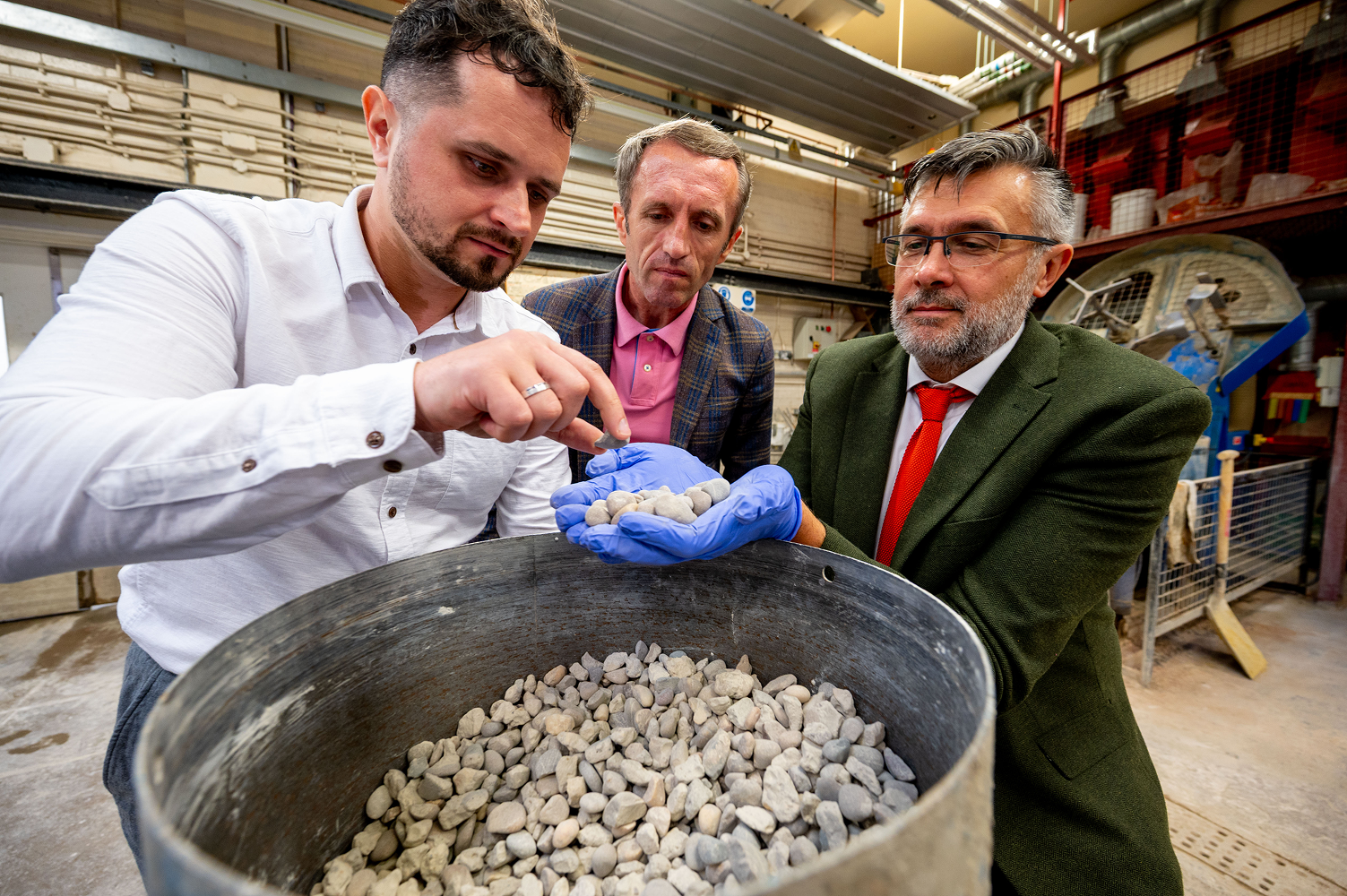
Dr Oleksii Hunyak and Professor Taras Markiv of Lviv Polytechnic examine samples of recycled concrete with Leon Black, Professor of Infrastructure Materials at Leeds
Dr Oleksii Hunyak and Professor Taras Markiv of Lviv Polytechnic examine samples of recycled concrete with Leon Black, Professor of Infrastructure Materials at Leeds
A collaborative project between Leeds engineers and Ukraine’s Lviv Polytechnic National University is helping to rebuild the war-torn country.
The Safe, Sustainable, and Swift Reconstruction of Ukraine project (S3RoU), brings together British, Ukrainian and Dutch organisations to turn rubble left behind by the ongoing war into sustainable, high-quality building materials. Its cutting-edge research into reusing demolition waste to make new concrete could dramatically reduce the carbon emissions of reconstructing the hundreds of thousands of buildings destroyed by Russian forces.
On a visit to Leeds, Professor Taras Markiv and Dr Oleksii Hunyak from Lviv were trained in how to analyse and assess the properties of end-of-life concrete. They underwent training on using an electron microscope to inspect and characterise concrete samples, and on using specialist kilns for preparing new cements.
Dr Hunyak, whose own home in Lviv narrowly escaped being reduced to rubble when a shell exploded about 100 metres away, added: “We believe this project will directly contribute to the safe and rapid recovery of Ukraine by helping us transform demolition debris into a resource for resilient rebuilding.”
At the core of the S3RoU project is a mobile production line which can travel between bombsites to upcycle concrete debris into new concrete by separating the damaged material into sand, stone and cement.
It is hoped the technologies developed by S3RoU can be used globally in post-conflict and end-of-life infrastructure reconstruction, hastening recoveries and contributing to greener futures, as well as in areas affected by disasters such as earthquakes and floods.
A glimpse under the ice
Using a decade of satellite data, researchers have identified 85 previously unknown lakes several kilometres under the frozen surface surrounding the South Pole.
Research led by doctoral researcher Sally Wilson increased the number of known lakes below Antarctica by more than half and identified new drainage pathways deep into the ice. Subglacial lakes form a crucial part of Antarctica’s icy structure, affecting the movement and stability of glaciers, and influencing global sea level rise.
Fertility beyond cancer
Two pioneering studies will address questions of fertility preservation for children and young adults who have gone through life-saving cancer treatment.
The UKSTORE project will build a comprehensive database to track the health, treatment, and reproductive outcomes of young cancer patients who have stored fertility tissue. A second project will develop a support tool for healthcare professionals to help guide patients and families through the reproductive decision-making process.
 Built with Shorthand