

Suiting the
action to
the word
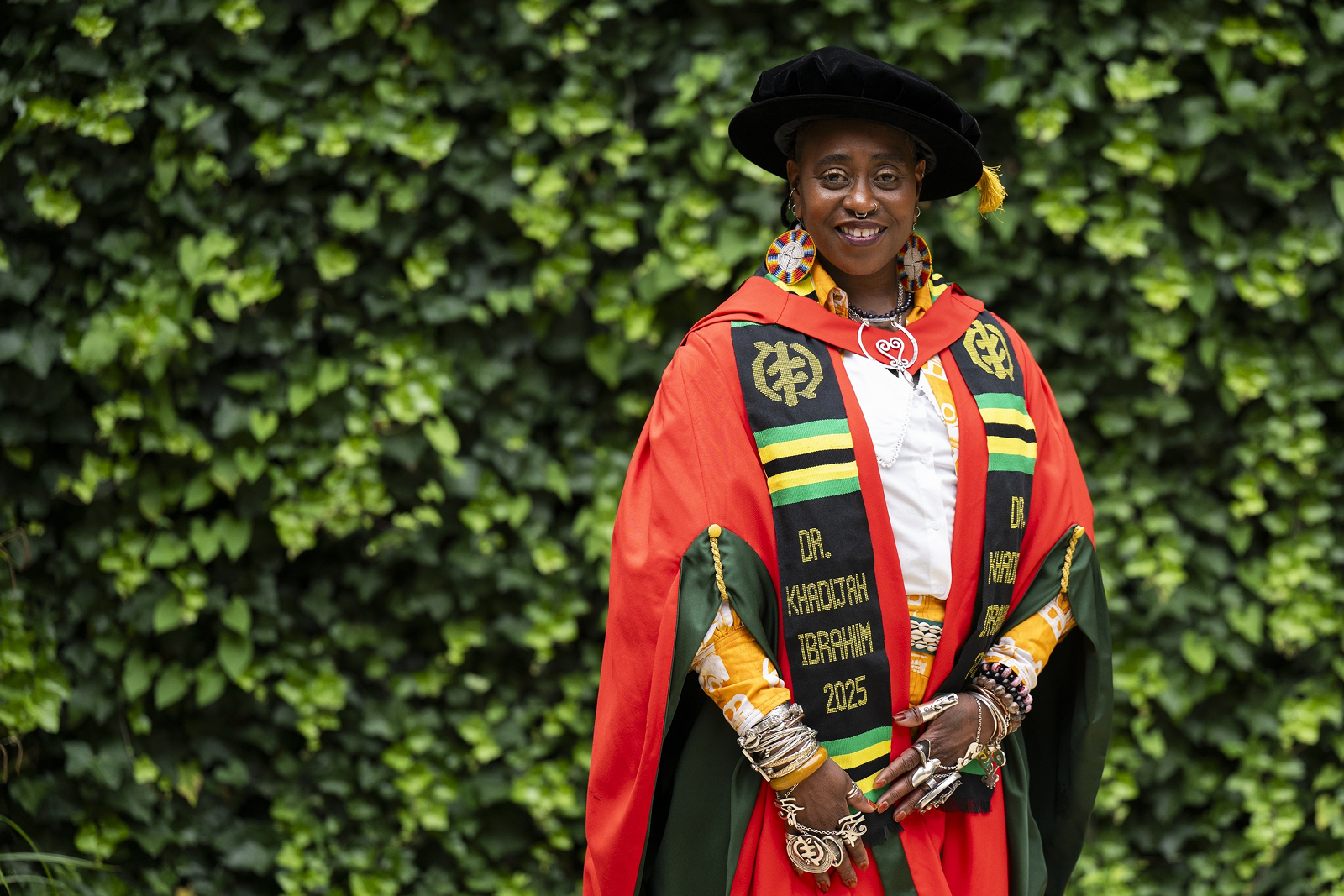

“Back then, everything was on floppy discs,” says Leeds-born literary activist, poet and dramatist Khadijah Ibrahiim. “It turned out that mine were corrupted and I lost everything.”
In a panic she came to campus at midnight to see if anyone could help. “I found a PhD student who rescued 70 per cent of it. I dictated the rest from my notes to a friend who could type very fast.”
Almost 25 years on, Khadijah’s work is celebrated rather than erased. Exploring themes of identity, heritage and social justice, her poetry has been published widely, and she has performed across the world. She is also the founder and artistic director of Leeds Young Authors which provides creative writing workshops for young people in under-represented communities.
A Fellow of the Royal Society of Literature, she has received the Leeds Black Award for outstanding contribution to the arts and the Leeds Legacy Award for international impact.
When my grandmother saw the chimneys she thought: ‘There must be plenty of work here’. She hadn’t realised that these were houses, not factories.
She credits her grandparents for instilling a passion for learning from an early age. “Education was so important to my family. It wasn’t just the five days at school – we had Saturday School run by the Afro-Caribbean community, and Sunday School at church. There was no playing out; it was all about books.”
Her grandparents had come to Leeds from Jamaica in the 1950s and her parents followed in the 1960s. “When my grandmother saw the chimneys she thought: ‘There must be plenty of work here’. She hadn’t realised that these were houses, not factories.”
Life was hard: “At first, Leeds was very unwelcoming. I know my grandmother asked, ‘What am I doing here?’ but their coming here shaped who I am.”
They became part of Chapeltown’s thriving Afro-Caribbean community, set up the first black pre-school nursery – and were determined their family would integrate. “I went to Harehills Middle School and it was very mixed – white, Afro-Caribbean, Asian, Eastern European. We didn’t recognise there were differences between us.”
And though Khadijah admits to not being strong in maths or science, it was the arts that quickly became her focus. “I could draw, I was always writing poetry and journals as a young person. I loved doing tap dancing and ballet. I was just drawn into the arts.” For secondary school, she took two buses every morning to attend Intake School in Pudsey, which has long had a focus on the performing arts.
Sadly, it was also here that she first encountered racism: “It affected me but didn’t stop me doing what I wanted to do.”
Leeds Young Authors was in part born out of that experience. “The city always had talented young people, but there was nowhere for them to go to develop that. I was fortunate that my family instilled the love of reading and writing, which has become central to my career and my life – and I wanted to share that passion. I wrote to lots of schools offering to work with them and all of them said yes.”
Leeds Young Authors spawned the acclaimed documentary We Are Poets 2012, which followed six young people from the city to compete in a ‘poetry slam’ contest in Los Angeles. And 20 years on from its foundation, the organisation continues to nurture young writers.
This summer Khadijah returned to campus to add an Honorary Doctorate of Letters to her two Leeds degrees – a BA in Arabic and Middle Eastern Studies (1999) and an MA in Theatre Studies (2001). “It’s such a privilege. I got a letter and read it over and over for two days before responding. I was so shocked and honoured that someone from my community can get this.”
She has fond memories of her time as a student: “As a girl I used to go past the Parkinson steps and really wanted to be part of it. I loved the idea of doing research and studying. My course included a year abroad and I spent it in Yemen, which was fascinating. Campus is full of people with great minds and potential. I loved the smell of books – and the library is a very nostalgic place for me.”
Khadijah remains involved with the University, sitting on the board of the Cultural Institute which supports interdisciplinary research, artist residencies, student opportunities and cultural programmes: “It feels like I’m giving back to an organisation that gave me so much,” she says.
She is proud too, that campus will be home to the National Poetry Centre: “Simon Armitage deserves a lot of the credit. It took a northerner and poet laureate to do this – not just for the north, but for the whole country. It will bring an international cohort who will see what the city and the region have to offer.”
It’s a region in which Khadijah remains firmly rooted. “I’ve lived in Egypt and in New York but there is such potential here and so many great artists and writers. There’s something about this city which constantly pulls me back.”
Creativity across cultures

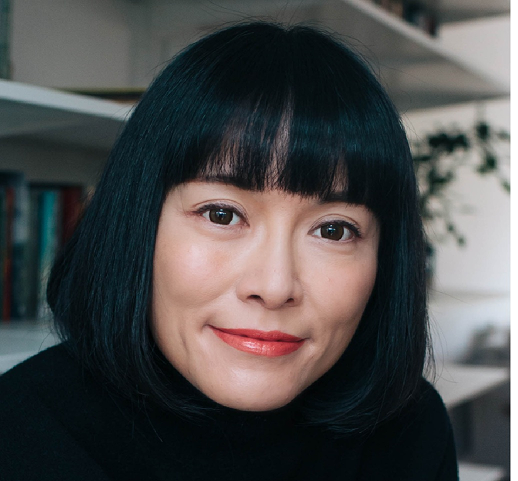
Award-winning author and translator Yan Ge has joined the University of Leeds as the newest member of the Cheney Creative Fellowship scheme.
The Fellowships have brought a new dimension to the long-established Cheney Fellowships, supported by Peter Cheney (Bacteriology and Biochemistry 1969) and his wife Susan. They enable world-leading practitioners and researchers to collaborate with the University on exciting projects in the creative arts.
Best known for her Chinese language fiction, Yan Ge is also recognised for the success of the English translations of her work and for her English language prose. She joins influential Chinese poets Professor Bai Hua and Dr Tammy Ho Lai-ming and American poet Shara McCallum who each hold Cheney Cultural Fellowships at Leeds.
Professor Bai Hua is among the speakers at the China-UK Poetry Exchange Festival in Chengdu from 31 March to 4 April 2026. Jointly organised by Leeds and Southwest Jiaotong University, the event will include poetry readings, translations, cross-cultural discussions, and a keynote address by Poet Laureate Simon Armitage, Professor of Poetry at Leeds.
 Built with Shorthand