

CALLING THE SHOTS

Watch back, as Jacqui returned to Leeds to speak at our exclusive Leeds Alumni Voices 2026 event.
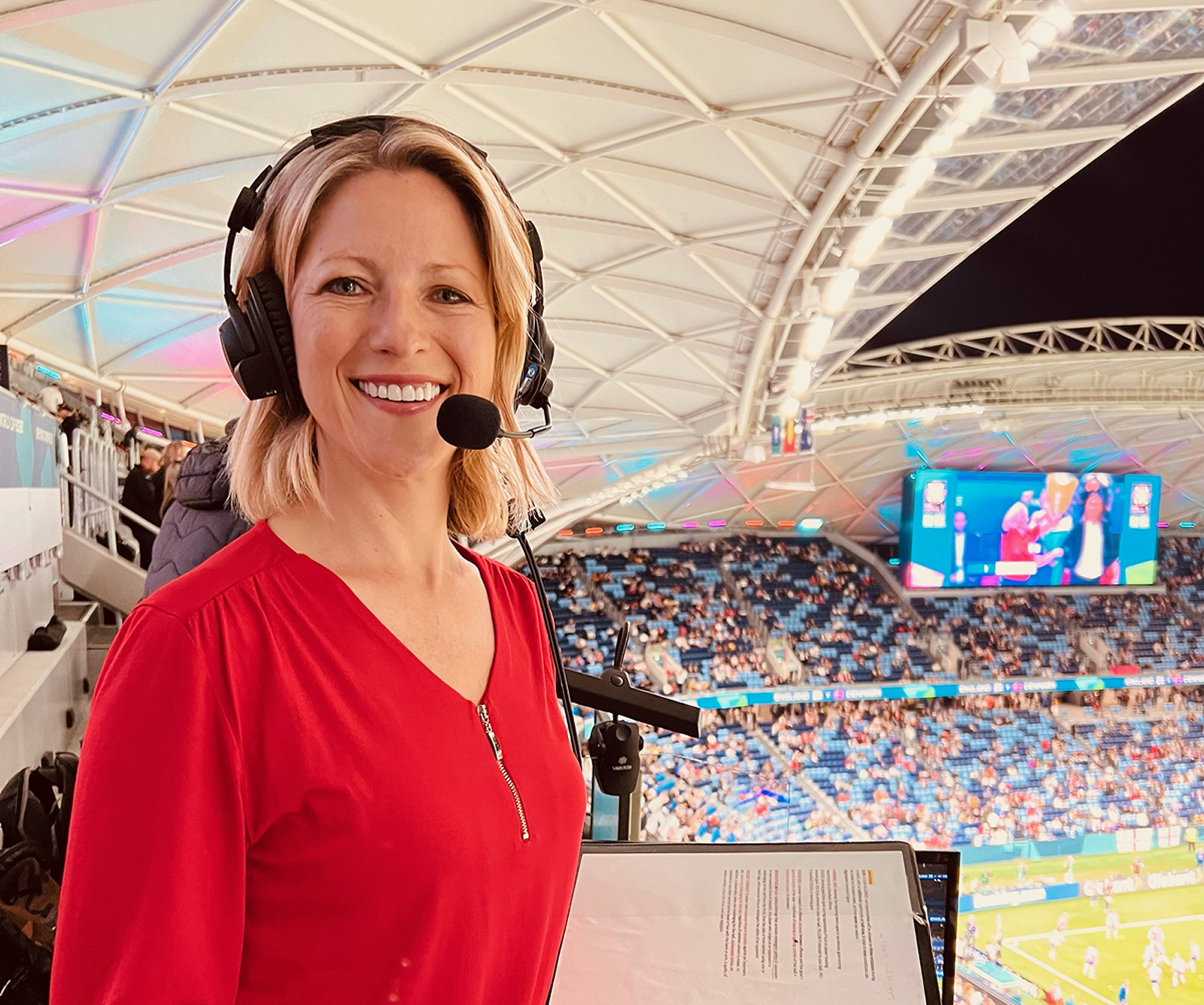
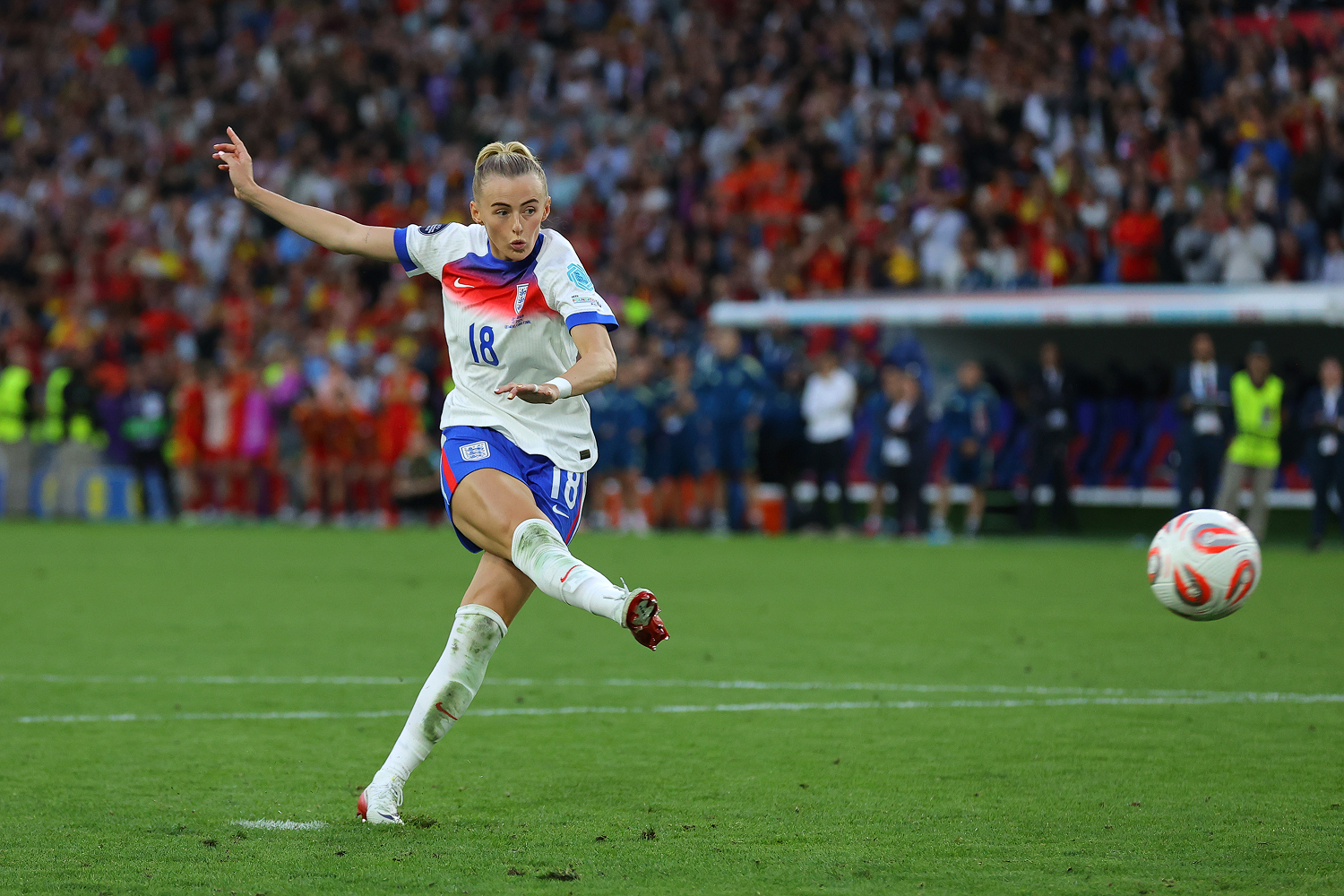
A hop, a skip, and a jump as she approaches the penalty spot, then Chloe Kelly hammers the ball into the roof of the net. A roar fills the stadium. In the commentary box, Jacqui Oatley (German 1996) declares “England are champions again”, then lets the crowd do the talking.
The Euro 2025 final was the UK’s most viewed television moment of the year as the Lionesses captured the nation’s heart. As an avid England fan, it must have been hard not to join in the celebrations, but Jacqui has been doing that for over 20 years.
“It’s about the audience, not me,” she says. “You hone your approach over time, you learn when to pause. It was an incredible moment, and who else would you want to hit the winning penalty but Chloe Kelly?”
Jacqui was commentating for Fox Sports to a US audience of 1.35 million. As she packed away the headphones and sat back in her chair, it gave her a chance to reflect on how times have changed.
When she became the first female commentator on the BBC’s flagship Match of the Day programme in 2007, it was a natural step in her sports commentary career. But for many football fans, it was wrong.
“I didn’t anticipate it,” says Jacqui. “One of the first things you learn as a journalist is that you don’t become the story. Suddenly I was, and people were questioning my knowledge of the game because I was a woman. I suppose someone had to be the first.”
And there was nobody better placed. Jacqui had been a student of football all her life, falling in love with the sport as a young girl – at a time when girls weren’t supposed to like football. She sat watching Teletext scroll through live results each Saturday. She listened on the radio, read the back pages religiously, and when she arrived at Leeds, played for the University.
“Before Leeds, I had nowhere to play,” Jacqui says. “I did keepie-uppies in the garden by myself. At Freshers’ Fair, I made a beeline for the women’s football team.
“Playing at Leeds was incredible. It was a different dimension – and with the social side as well, it was just fantastic.”

A devastating knee injury cut her playing days short, but the loss motivated Jacqui to pursue sports journalism. She quit her job in intellectual property, sold her flat, and slept on friends’ floors to save money. She worked on hospital radio, attended evening classes, got a seat in press conferences, and soon enrolled for a postgraduate diploma in broadcast journalism.
Her first role came at BBC Radio Leeds as a sports reporter covering non-league football in West Yorkshire, before she worked her way up to match commentary.
“That’s where I started doing something that wasn’t the norm, because women didn’t commentate,” Jacqui says. “I was used to being the odd one out, though. I just had to be myself and get on with it – because football was natural to me.”
For my kids now, there’s no ‘men’s football’ or ‘women’s football’. It’s just football. I love that.
She recalls standing in the press box at Bradford Park Avenue, surrounded by the crowd, lights on her, and a running track in front of the pitch making it difficult to tell what was happening. “I learnt a lot at grounds like that. I was a young blonde woman among guys who had been working in the press box for 50 years.”
Those experiences prepared her for the big stage – commentating on BBC Radio and, memorably, Match of the Day. Through the furore that followed, Jacqui continued to work on the Premier League and persuaded producers to let her cover the women’s game too: “This was important. Greater coverage meant more money, better coaching and better facilities. It’s taken years, but we’ve improved the whole landscape.”
Jacqui’s voice in football – covering everything from World Cups to the Champions League – has helped young girls and women to see there was a space for them. She was a founding member of the Women in Football network, assembling likeminded individuals from different parts of the industry to promote the game.
In 2015, she was awarded an MBE for services to broadcasting and diversity in sport: “I accepted it on behalf of every little girl who was told she shouldn’t play football, and every woman who has been told to stay out of the press box.
“For my kids now, there’s no ‘men’s football’ or ‘women’s football’. It’s just football. I love that.”
Jacqui now works in the US for Fox Sports, where she became the first woman to commentate on football for a US network. At Euro 25, she enjoyed palm trees in the studio, adjustable standing desks, multiple analysis screens, life in Beverley Hills – and, of course, Chloe Kelly’s winning penalty.
It all feels a long way from Bradford Park Avenue, squinting across the running track to see what was going on. “But if I was still there, I’d be happy,” Jacqui says. “So long as I’m working in football, I’ll feel fulfilled.”
 Built with Shorthand