

Brutalist and proud
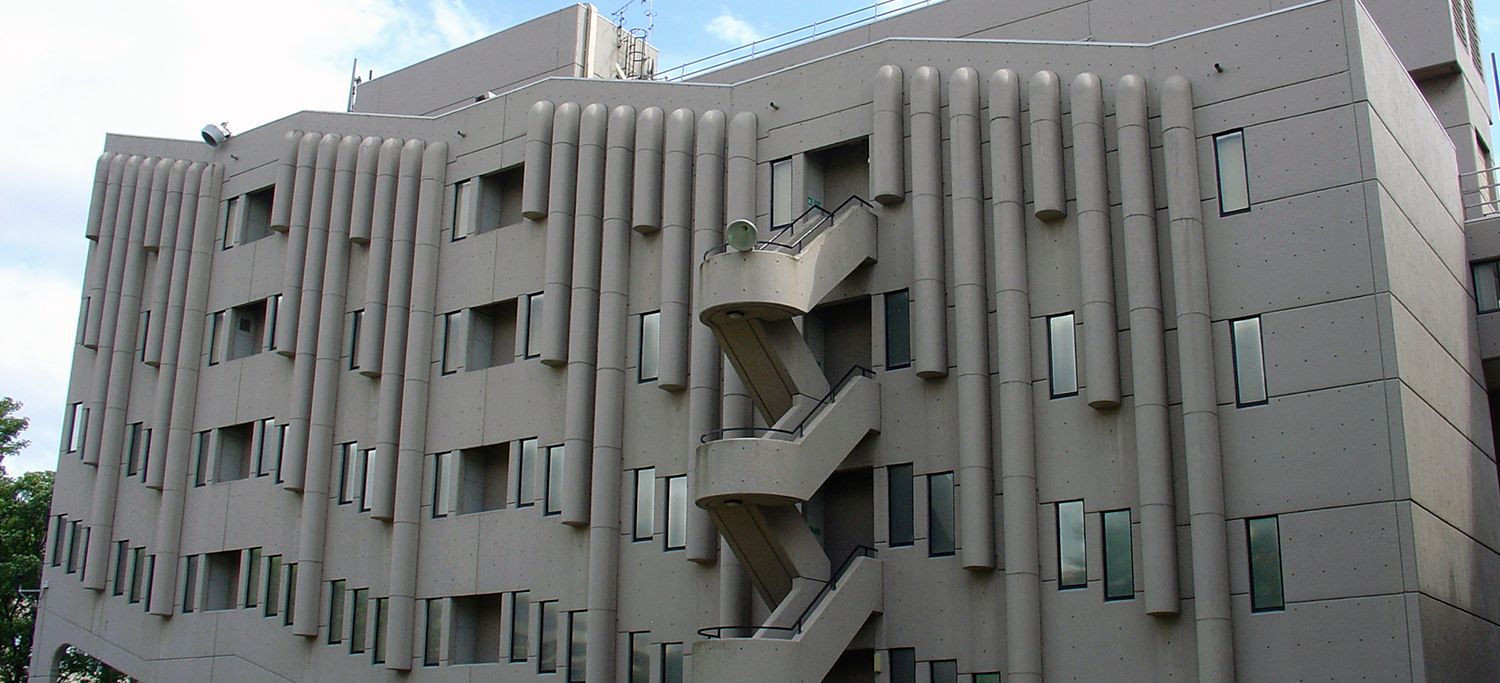

This story by English graduate Ian Beetlestone first appeared in the Leeds alumni magazine, 2009. The campus has changed even more since then.
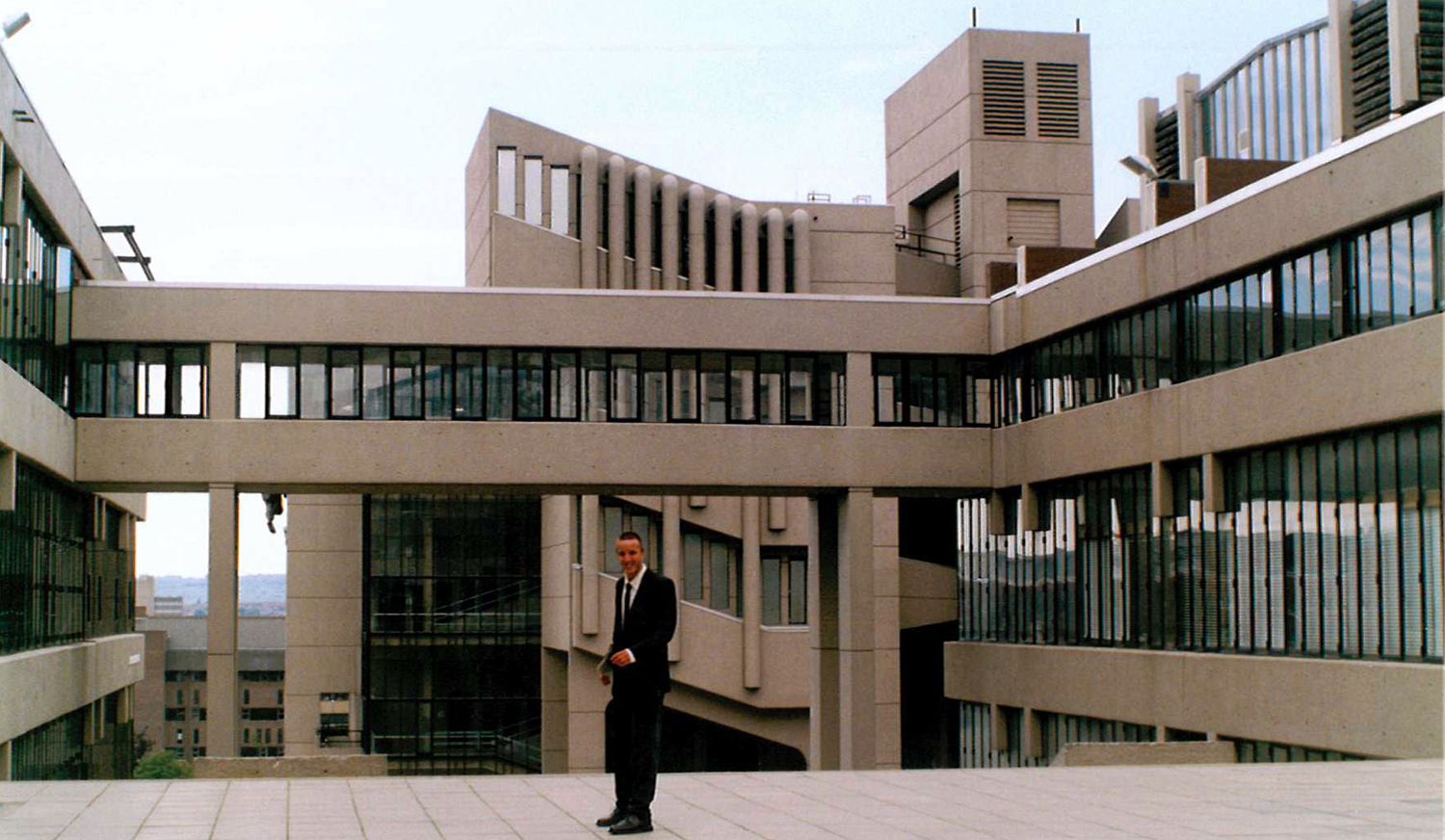
There is a photograph of me taken by my mother on the day I graduated from Leeds in 2000. The sky is a very light grey, the sort that suggests a bright haze, and my squint confirms this. I am standing, suited and booted, alone on a vast concrete plateau.
Behind me the ground suddenly drops; above me are two sleek horizontal lines of concrete between which are a series of black-framed windows, a concrete and glass corridor in the sky, supported by two slender concrete pillars that disappear into the concrete valley below. The corridor joins two enormous concrete and glass blocks, the horizontal lines continuing seamlessly and perfectly into them as they wrap themselves around, behind the foreground, behind the photographer. And in the background, beyond the hanging corridor, is some sort of monstrous concrete machine; glass slats, angles, pipes and towers, perhaps at rest, between futuristic chugs.

Just around the corner from this location, hundreds more graduates are doffing mortars for snap-happy parents outside the neo-gothic splendour of Alfred Waterhouse’s Great Hall. Theirs is an instantly recognisable university scene but here, alone, out of context, I could be anywhere the imagination chooses: a film set, some NASA facility, an ominous government research complex.
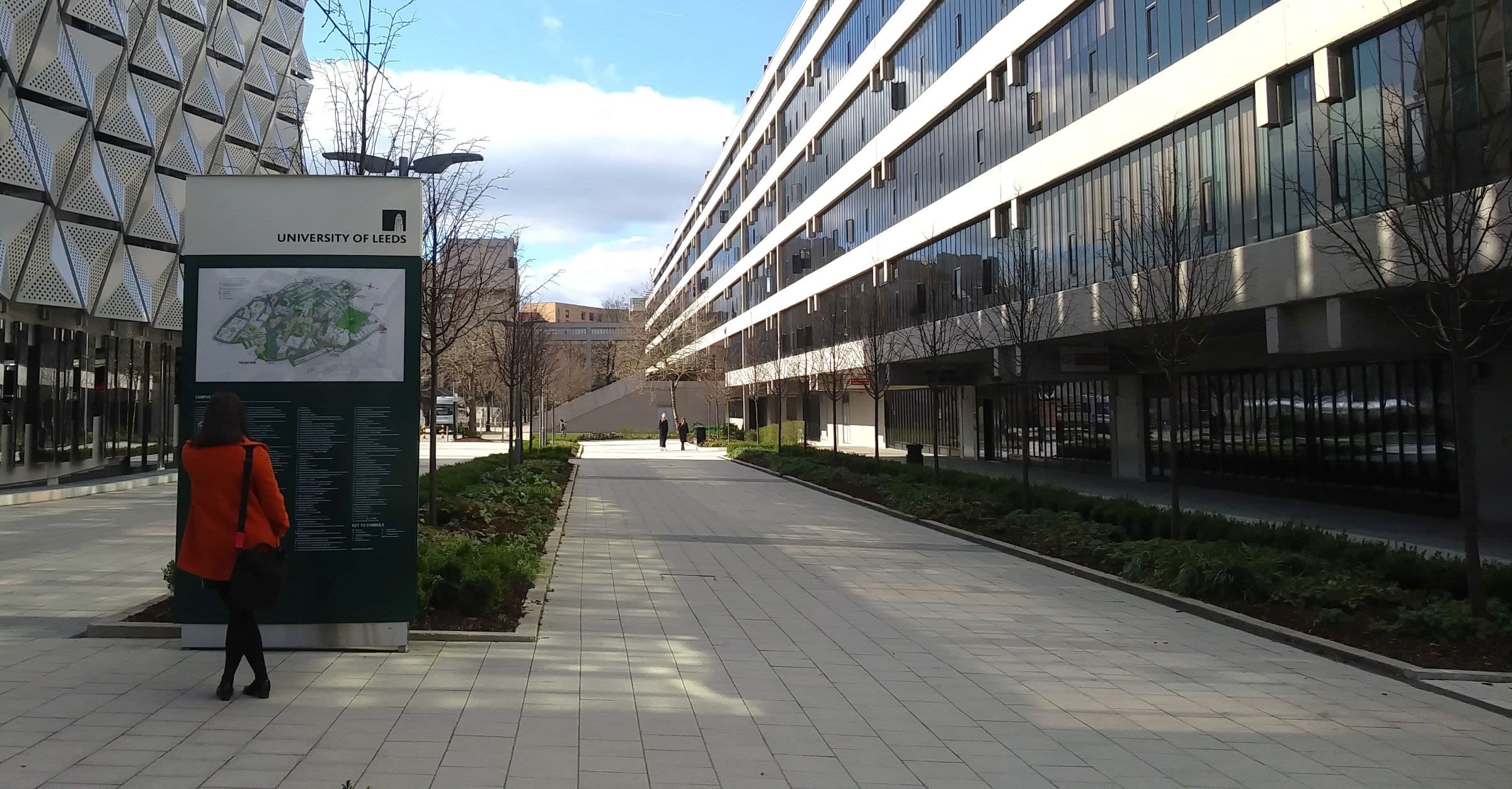
In fact anyone associated with the University from the 1970s on would recognise this concretescape as the heart of the unforgettable Brutalist quarter, designed by architects Chamberlin, Powell and Bon, fresh from their work on London’s monumental Barbican Centre.
To my mother’s right, just out of shot, is the Edward Boyle Library; the hanging corridor is the legendary Red Route, and the concrete machine is the Roger Stevens Building, originally known as the Lecture Theatre block.
It is unlikely there has been a Leeds student in the last three or four decades who hasn’t set foot in one of them, so quite why I am alone in the picture is a bit of a mystery. My solitude adds to the sense of alienation, of defamiliarisation with a fairly mundane and thoroughly everyday environment, that these magnificent buildings foster.

The Chamberlin plan
Chamberlin’s 1960 development plan for the University precinct, led at Leeds by the University's architect Geoffrey Wilson, was only partially completed. The buildings I stand among are mammoth, but they are tiny compared with what was intended.
This new Brutalist world was to sweep from the Parkinson Building in the east to Clarendon Road in the west, and down to the Ring Road in the south, demolishing pretty much anything that got in its way.
The Chamberlin Plan was born out of a frustration amongst the architectural and university communities that the post-war period had seen a succession of unimaginative, bland and generic new university building in the UK. This was in unflattering contrast with equivalent building programmes in the USA and with innovative schools built here in Britain.
Our architectural past
The previous thrust to Leeds’ architectural vision had been the white Portland stone work of Lanchester and Lodge, the most famous example being the still iconic Parkinson Building on Woodhouse Lane.
The Lanchester programme had started in the late 1920s but, by the 1950s when the Parkinson tower was finally completed, it was ushered into an architectural world that was very different to that in which it had been conceived.
Now was a time when Le Corbusier, champion of modern architecture and rational town planning, had become a global celebrity. Meanwhile the traditional Parkinson tower represented the conservative tastes of British universities at the time.

Chamberlin, Powell and Bon were deliberately brought in to change all that. Their plan held a bullish disregard for the work of Lanchester & Lodge, for the red brick buildings by Waterhouse before them, and for the myriad Victorian terraces that filled in the gaps between the flagship buildings on the site.
Bold new thinking
Rarely had a British university looked so readily to architecture’s cutting edge, nor on such a startling scale. The plan was heralded universally as a visionary work of brilliance, in the architecture community, in town planning, in university circles throughout the country, and even in the local press.
The defining characteristics of the Chamberlin plan, aside from the singular style of the buildings, were its holistic approach to the campus and the scale of its unifying vision. The destruction of the old was partly out of disdain for its style, but also to create a coherent, people-friendly and purpose-built campus.
It is thanks to Chamberlin and Wilson that the Ring Road is sunken in a moat to allow easy pedestrian access over bridges between the city and the University. Car parking was to be peripheral, allowing the free movement of pedestrians through the campus in a series of elevated walkways that sidestepped (or overstepped) the topography of the land.
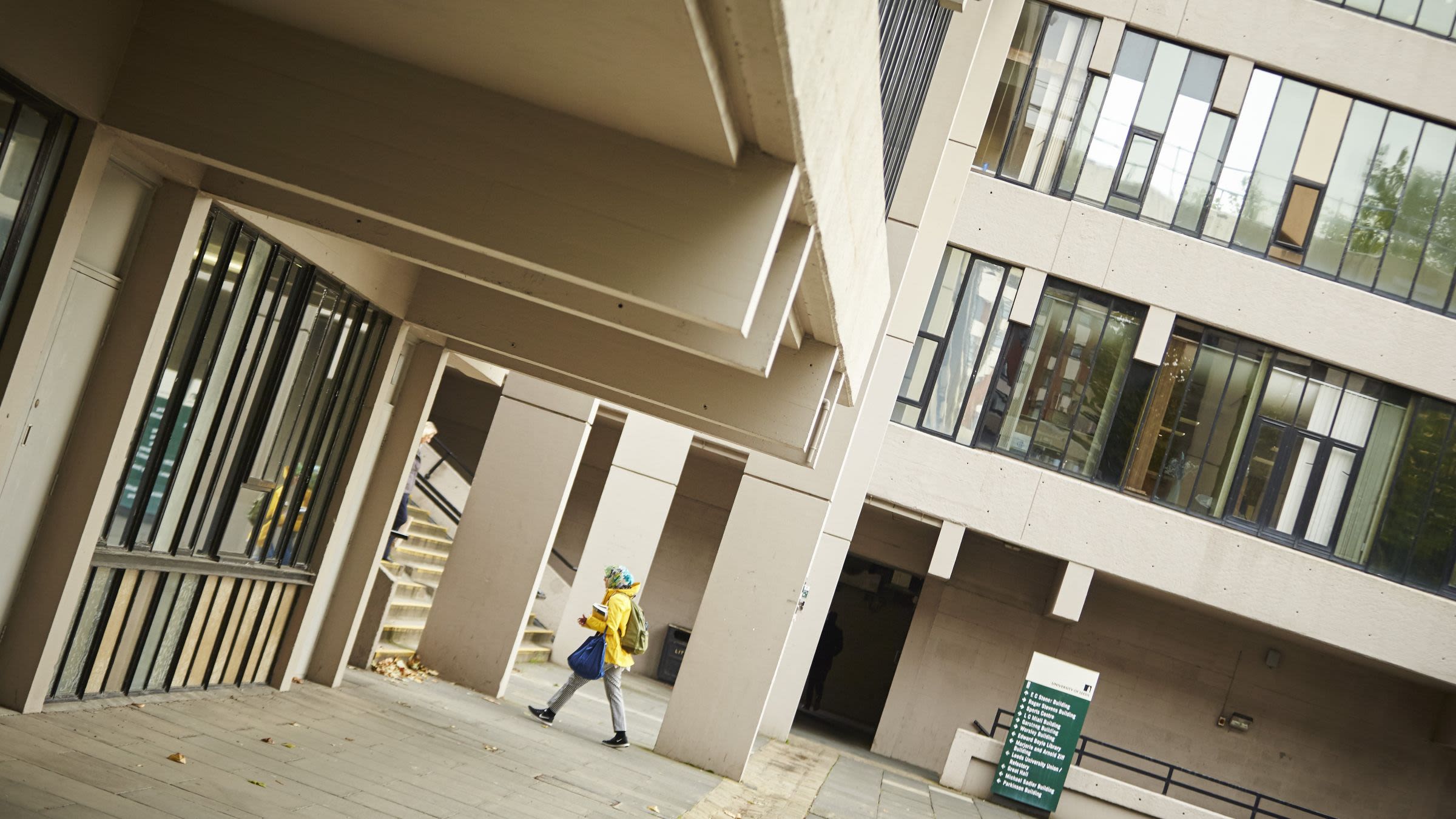
The buildings themselves were designed to be flexible; you can still see beams sticking out at various ends of them (the Edward Boyle Library and the EC Stoner Building, for example) that allowed for extension. Indeed the long building, a ‘spine’, that terminates at the Senior Common Room Building was intended to continue right out towards Charles Morris Hall and beyond.

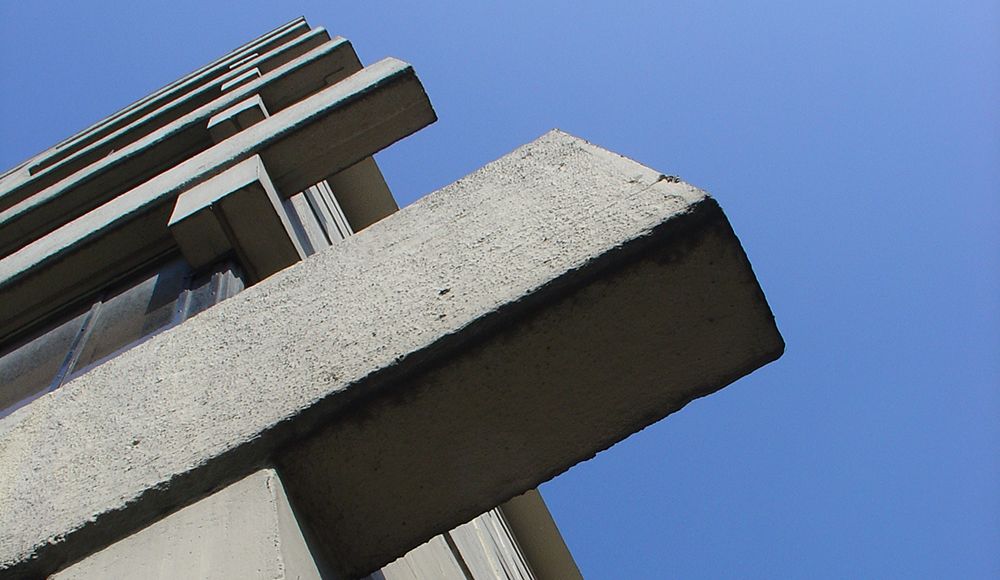
The top floors of academic buildings were given over to student accommodation, but departments could extend upwards when necessary and in fact students were happily living above the school of politics and international studies well into the twenty-first century.
Just as Lanchester and Lodge had suffered at the hands of fashion, so by the time Chamberlin’s plan was well underway, the trend towards modernism had turned. Chamberlin met his match at Springfield House, still standing to the west of the University. It blocked his largest spine that was to extend towards Clarendon Road.
By the time work started heading in this direction in the early 1970s, the local conservation movement had begun to pick up pace. An application to demolish Springfield House was rejected. Chamberlin appealed and lost and, when he died in 1978, his partners’ contract was terminated.
Leeds City Council had agreed to take on responsibilities for landscaping the area when they granted planning permission for the plan, allowing the Chamberlin machine to plough onwards through the campus without having to tidy up or carry out cosmetic detailing. As a consequence, much of the landscaping was never really done, with the relatively recent exception of the stunning Chancellor’s Court, once known as the Mathematics Court, adjacent to the Roger Stevens Building.

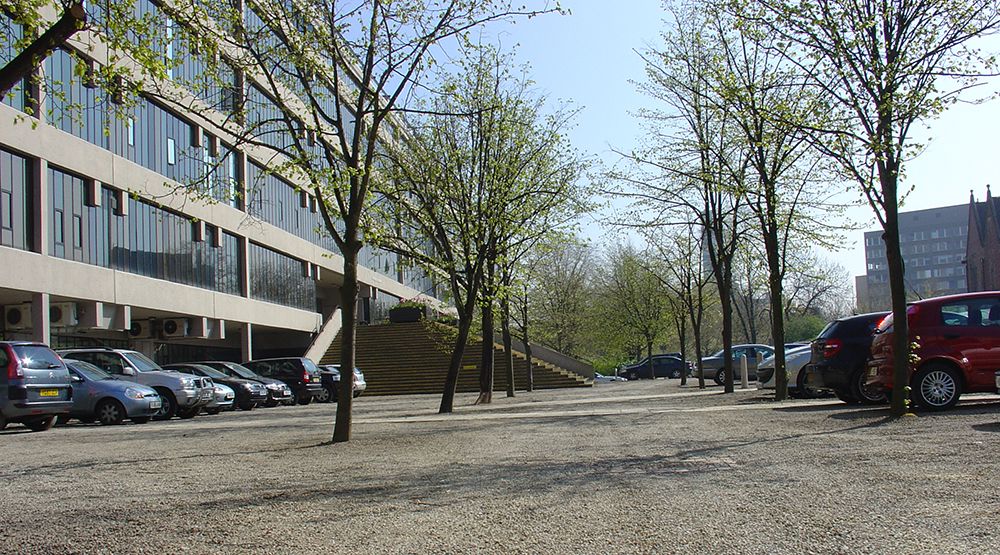
Together, the unfinished landscaping and abruptly ended building programme left a site that was far from the unified, self-contained campus envisaged by Chamberlin, but rather a further contribution to the collection of unrelated buildings that has been the University of Leeds throughout its history.
With a view to the past, new buildings have arrived on campus. The Marjorie and Arnold Ziff Building is a bold statement of intention, certainly one of the most interesting new buildings on the central campus since the death of Chamberlin. The building adjoins the Social Sciences block, picking up where those beams left off. In style, while it is radically different to anything else on the site, it nods an acknowledgement to Chamberlin in its scale, colouring and use of glass but it equally blends in well with Lanchester’s Michael Sadler Building (the Arts Block) across the road from it. The building was funded by the Ziff family’s philanthropy, an act which in itself is a continuation of a long tradition that begins with donations from the Clothworkers’ Foundation for Yorkshire College buildings.
Much of the land left behind by Chamberlin is now classified as protected open space. Both the city and the University have identified the need to improve legibility of routes through campus by using some of this open space and creating gateways into the University. There are plans to create more intuitive routes in and through campus by weaving together its various elements, and to fill in those gaps that the aborted Chamberlin plan left behind.

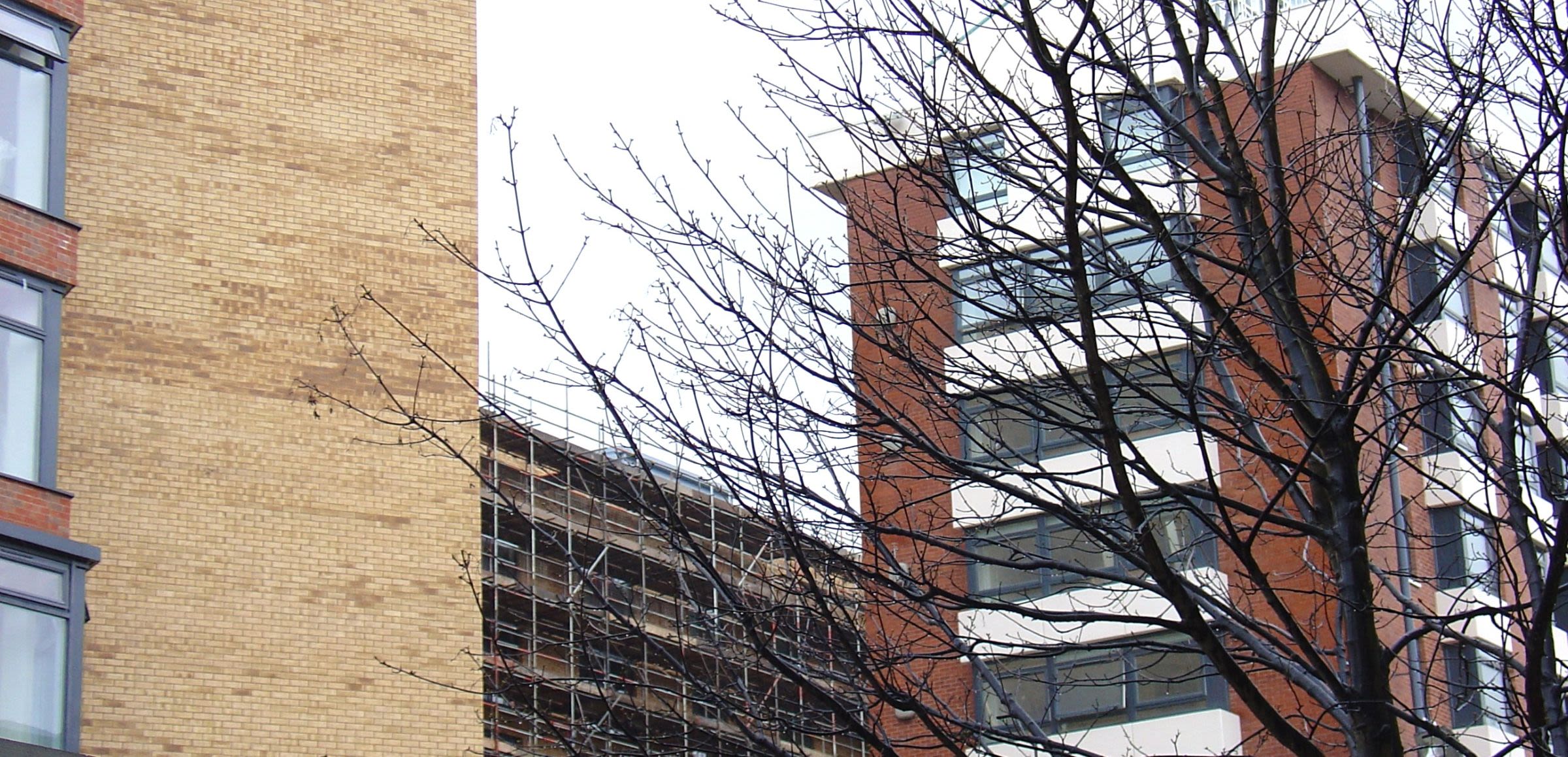
The redevelopment of Charles Morris Hall is already underway, offering not only hundreds more top-end student flats, but also an Oxbridge-style courtyard which forms part of a thoroughfare from University Square out into the relatively new Western campus (the site of the Leeds Grammar School until 1997), across Clarendon Road. On the way there, the walker will encounter a Georgian-style square in keeping with the elegant houses around Lyddon Terrace, adjacent to a rebuilt nursery, in an area that is currently half car park, half wasteland. Thus the legibility of route extends right from the Business School and future law school in the campus’s far west across to the Parkinson Building and south to the Ring Road. Just, in fact, as Chamberlin intended.
Chamberlin’s most radical, or heretical, proposal was for the University’s main entrance. It involved the demolition of the Parkinson steps and the re-routing of Woodhouse Lane to make way for acres of woodland housing a residence for the Vice-Chancellor. The new plans keep the popular Parkinson steps, but the long-neglected pedestrian gateway will be tidied up with a welcoming structure between the Parkinson and Michael Sadler Buildings, and a redesigned security booth standing, as it happens, very close to the site of an old toll booth on a turnpike that became Woodhouse Lane.
A glance around reveals much of the University’s history. Victorian terraces, Chamberlin’s EC Stoner Building, the brand new Marjorie and Arnold Ziff Building and Lanchester’s Michael Sadler Building fill the landscape, with the promise of the red-brick splendour of the Baines Wing just through the gate. It is fitting that here a new entrance to the University will announce what awaits beyond: a campus built on ambition with even greater plans for the future.
Our man on campus, who was tasked with the building of our Brutalist buildings was Geoffrey Wilson (Civil Engineering 1940, MSc 1941). Born in 1921, in Bradford, under modest circumstances, he lived in a back-to-back row house without electricity - a far cry from the pioneering architecture that he oversaw.

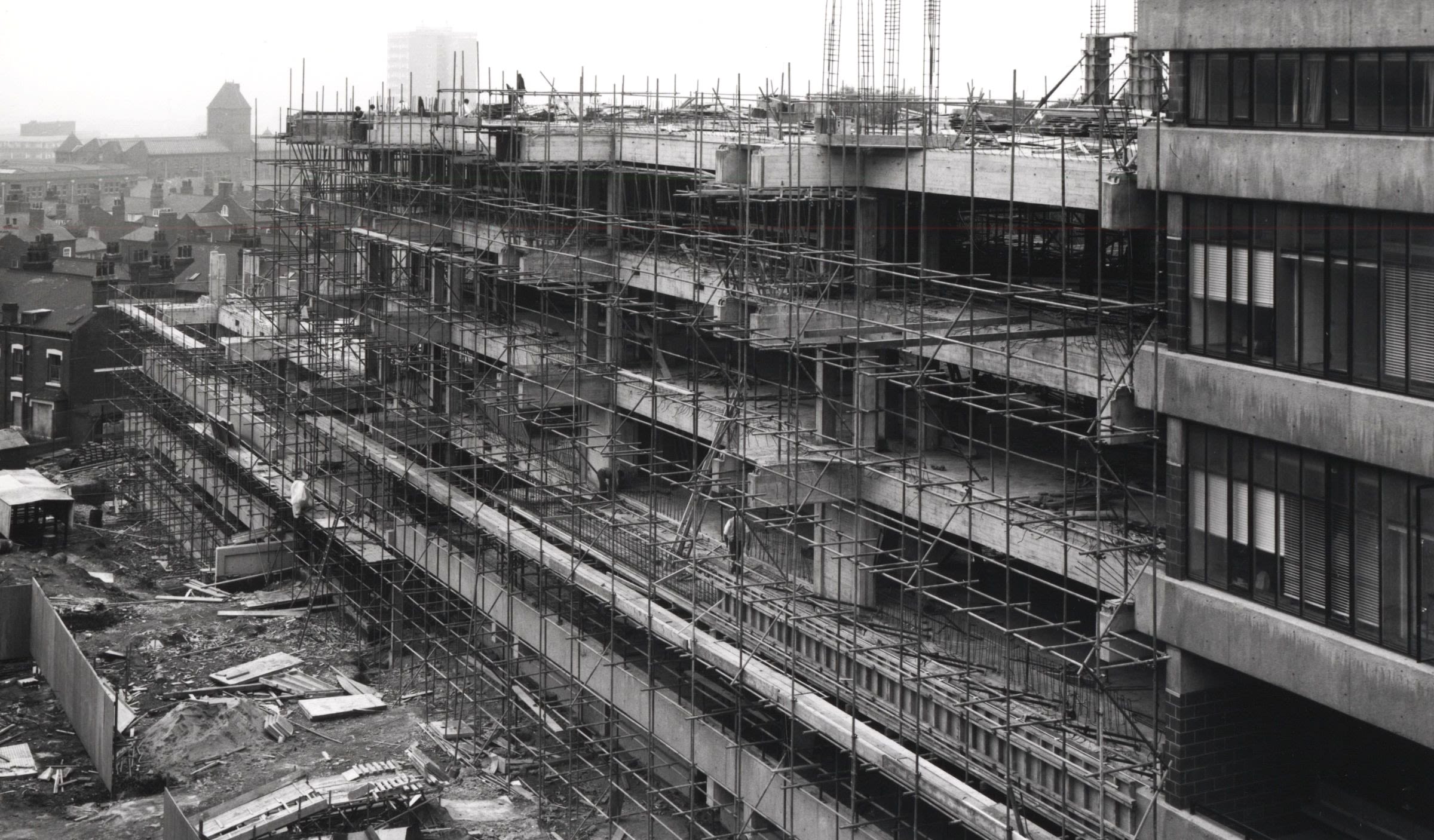
After service in World War II he became a lecturer in civil engineering and became outraged by the ugliness of the bridges over the M1, Britain’s first motorway. As a result he instituted the country’s first course in Architectural Engineering, now part of the received teaching canon.
With his Associate of the Royal Institute of British Architects (1954) qualifications, Geoffrey became the first University Planning Officer at the University of Leeds.
Persuaded to take charge of the post war expansion, he helped manage the campus capacity for growth – from 3,000 towards its present 33,000 students.
His advice to change architectural consultants resulted in the appointment of Chamberlin, Powell and Bon (who had already designed the Barbican in London) to develop plans for the expansion of the University.
Their collaboration resulted in a development plan that won international acclaim and awards for several of its buildings.

 Built with Shorthand